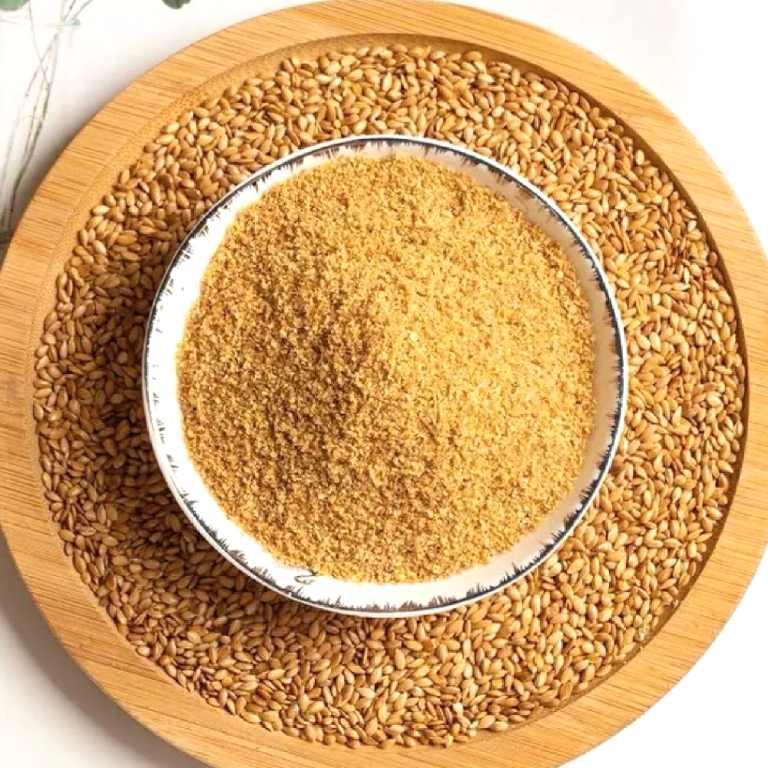
How many calories in 1 tbsp of flaxseed?
One tablespoon of flaxseed contains approximately 30–55 calories, with most of the energy coming from healthy fats (especially ALA omega‑3) and a smaller contribution from protein and fiber. This portion size also delivers notable amounts of dietary fiber, plant protein, and micronutrients relative to its caloric contribution, making flaxseed a nutrient‑dense ingredient for formulations, functional foods, and portion‑controlled nutrition planning. Understanding the calories alongside macro and micronutrient distribution helps food professionals and formulators balance energy density with functional benefits.
Flaxseed has earned a spot as a superfood thanks to its rich nutrient profile. But if you’re watching your calorie intake, you might wonder — how many calories are actually in a tablespoon of flaxseed? And what about flaxseed meal and kernels?
Here is a data-driven comparison of flaxseed forms, including calorie content, nutrient breakdown, and usage recommendations — with insights from scientific sources and food industry applications.
1. General Nutrition Analysis of Flaxseed
Flaxseed (also known as linseed) is packed with alpha-linolenic acid (ALA), fiber, and plant-based protein. It’s also rich in lignans, antioxidants that may offer anti-inflammatory and anti-cancer benefits.
Typical Nutrient Composition per 100g of Whole Flaxseed (USDA, 2024):
| Nutrient | Amount per 100g | % of Calories |
|---|---|---|
| Energy | 534 kcal | 100% |
| Fat | 42.2 g | ~70% |
| Carbohydrates | 28.9 g (fiber ~27g) | ~21% |
| Protein | 18.3 g | ~9% |
| Omega-3 ALA | 22.8 g | — |
🔎 Caloric breakdown:
Fat contributes ~75% of total calories.
Fiber provides bulk without digestible energy (helps with satiety, but has minimal direct caloric value).
Protein and digestible carbohydrates contribute a smaller share.
2. How Many Grams in 1 Tablespoon?
| Product Type | Weight per 1 tbsp (US) | Source |
|---|---|---|
| Whole flaxseed | ~10.3 g | USDA (SR Legacy, 2019) |
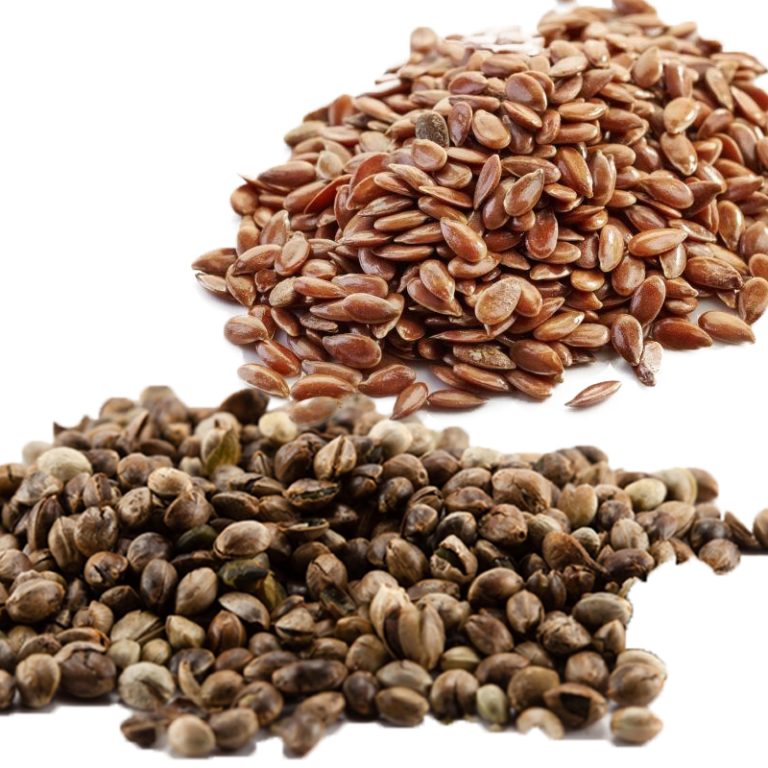
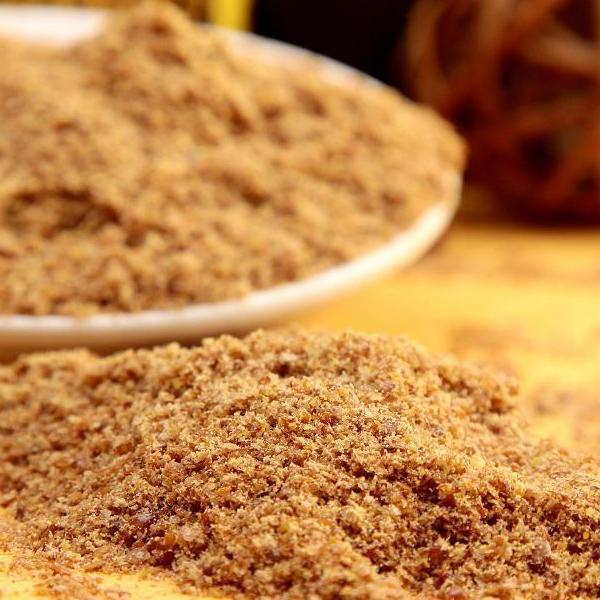
| Flaxseed meal | ~7 g | Bob’s Red Mill specs |
| Flaxseed kernels | ~9 g | Manufacturer avg |
Note: 1 tablespoon = 14.8 mL (volume); weights vary due to density and grind.
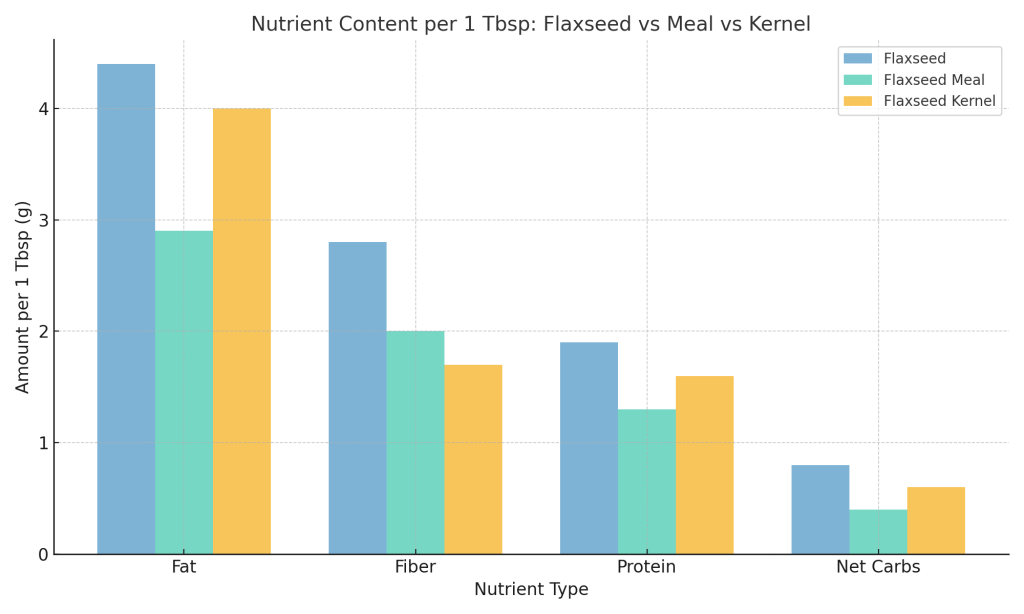
3. Nutritional Comparison Table: 1 Tbsp Each
| Nutrient (per 1 tbsp) | Flaxseed (10.3g) | Flaxseed Meal (7g) | Flaxseed Kernel (9g) |
|---|---|---|---|
| Calories (kcal) | ~55 | ~37 | ~48 |
| Fat (g) | 4.4 | 2.9 | 4.0 |
| Fiber (g) | 2.8 | 2.0 | 1.7 |
| Protein (g) | 1.9 | 1.3 | 1.6 |
| ALA Omega-3 (g) | 2.4 | 1.7 | 2.1 |
| Carbs (net) | ~0.8 | ~0.4 | ~0.6 |
Key Takeaways:
Flaxseed meal has fewer calories due to being lighter and less oily.
Kernel offers slightly more omega-3 per gram of fat.
Whole flaxseed may not be fully digested unless ground.
Source: USDA (2024); Bob’s Red Mill; Canadian Flax Council.
4. Why Do People Care About Flaxseed Calories?
Here are some user motivations for tracking flaxseed calorie content:
| Concern | Why It Matters | Best Option |
|---|---|---|
| Weight management | High-fat foods are calorie-dense | Flaxseed meal (lower kcal) |
| Keto/low-carb diet | Need low net carbs and healthy fat | Whole/kernels (more fat) |
| Heart health (ALA intake) | More omega-3s with fewer calories | Flaxseed kernel |
| Digestive health | High fiber with lower energy | Flaxseed meal |
| Meal planning & macros | Need precise caloric/macronutrient control | All, depending on the goal |
Recommendation:
Use flaxseed meal for calorie-conscious or high-fiber diets.
Choose kernels or whole seeds for omega-3 and fat-rich nutritional plans.
5. Flaxseed Forms: Industrial Use & Product Development Insights
| Product Type | Food Industry Use | Industrial Advantage | Product Development Ideas |
|---|---|---|---|
| Whole Flaxseed | Bakery toppings, cereals, granola | Stable shelf life, minimal processing | Nutritious crunch in bars/cookies |
| Flaxseed Meal | Baking, smoothies, meat extenders | Easy to blend, cost-effective fiber | High-fiber snacks, plant-based meat |
| Flaxseed Kernel | Oil pressing, premium omega-3 blends | Rich in oil, visually appealing | Omega-3-rich supplements, vegan butter |
🏭 R&D Insight:
Flaxseed meal is ideal for high-fiber functional foods.
Flaxseed kernels are perfect for premium omega-3 positioning.
Whole flaxseed offers sustainability in clean-label foods with minimal processing.
6. Conclusion: Which Flaxseed Form Is Right for You?
Flaxseed is calorically dense — but nutrient-rich. Here’s a quick summary:
1 tbsp of whole flaxseed: ~55 kcal, high in omega-3s and fiber.
1 tbsp of flaxseed meal: ~37 kcal, best for low-calorie, high-fiber diets.
1 tbsp of flaxseed kernels: ~48 kcal, rich in oil and omega-3s.
If you’re aiming to lose weight, flaxseed meal offers the best calorie-to-fiber ratio.
If you’re on a keto or high-fat diet, kernels or whole seeds are more beneficial.
From a product innovation view, each form serves unique roles in food formulation.
References
U.S. Department of Agriculture. (2024). FoodData Central. Retrieved from https://fdc.nal.usda.gov/
Bob’s Red Mill. (n.d.). Flaxseed Meal Product Sheet. Retrieved from https://www.bobsredmill.com/
Flax Council of Canada. (2019). Flaxseed: A Nutritional Powerhouse. Retrieved from https://flaxcouncil.ca/
Institute of Medicine. (2005). Dietary Reference Intakes for Energy, Carbohydrate, Fiber, Fat, Protein, and Amino Acids. National Academies Press. https://doi.org/10.17226/10490